


EXCLUSIVE: Inside Hwaseong Correctional Institution — An Unprecedented Look Inside a Korean Prison

How Dojeon team member Lewis Hooper went behind the walls of Hwaseong Correctional Institution to investigate vocational training programs and reveal the human stories behind the high-security gates.
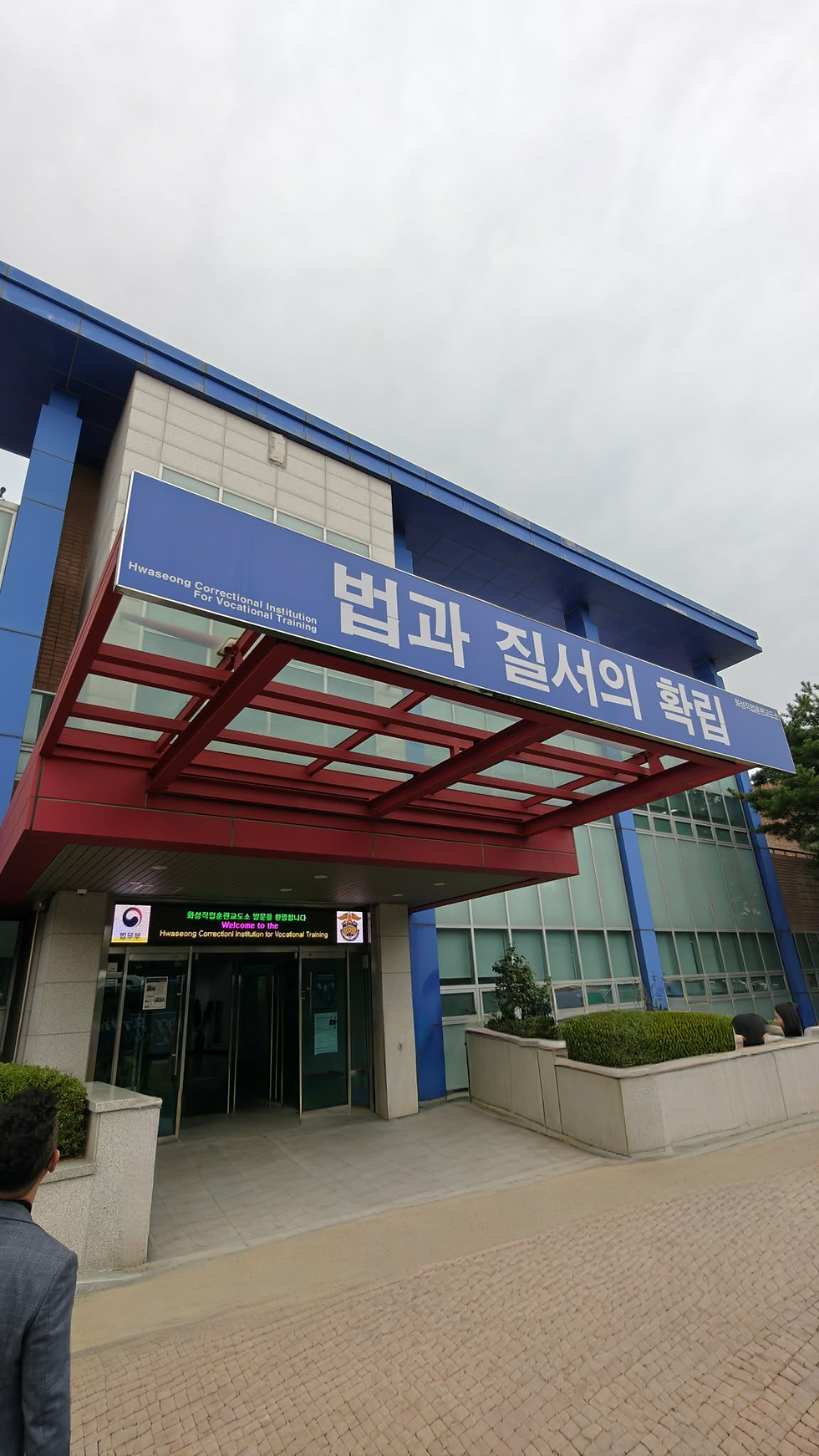
Beyond the Walls: Inside Hwaseong’s Vocational Training Revolution
As soon as I stepped through the security gates of the correctional facility, I knew that it would not be a standard day in the office. After being taken to one of the meeting rooms, I surrendered my personal belongings and exchanged them for my visitor pass.
The purpose of my visit was to gain a better understanding of the work and programs run at the Hwaseong Vocational Training Correctional Institution, a specialized facility operating under the Korea Correctional Service of the Ministry of Justice.

What makes Hwaseong Vocational Training Correctional Institution special is that, although it functions as a regular prison, it also has a forward-thinking mission, intending to transform the lives of inmates through hands-on, highly structured rehabilitation and training, with the hope of getting them into the workforce upon their release at the end of their sentences.

Inside the Programs: Building Futures from the Ground Up
At the heart of Hwaseong’s mission are its comprehensive vocational training programs, which draw applicants from correctional facilities nationwide through a rigorous selection process.
Applicants from other correctional institutions can apply to be transferred to Hwaseong Vocational Training Correctional Institution in order to undertake vocational training, as long as they have time left on their sentence.

During my visit, I was able to walk through the facilities and observe firsthand inmates engaging in various trades, including ceramics, 3D design, and mechanical design. The aim here is to bridge the gap between incarceration and employment.
Hwaseong runs various programs ranging from six months upwards, and inmates take one of twenty-six courses for around four and a half hours each day. Once they complete their courses, industry-level certificates are awarded, mostly in-house, by examining bodies.
Specialized courses span industries such as auto repair, welding, baking, pastry making, Korean cuisine, and Chinese culinary arts, with some of the more popular courses being ceramics and baking.
What I also found interesting was that part of Hwaseong’s mission is targeted therapy for specific offenses to help manage psychological well-being. Pre-release transition, counselling, and character education services are on offer for inmates.
Reflections and Impressions: What It Was Like Inside
Before visiting Hwaseong Correctional Institution, I did have an image of what a correctional institution would be like, mainly involving some of the classic clichés of cold, stagnant confinement and lazy inmates. That said, my preconceptions quickly changed after experiencing Hwaseong firsthand.

Despite being guarded during my visit, and with most of the places I saw being pre-planned, the atmosphere inside was surprisingly focused and industrious rather than oppressive. Of course, there were individual cells for inmates with exceptional behavior or who were in need of confinement, though most cells housed between five and six inmates.
The workshops that I experienced did make it easy to forget that some of these inmates are in for various crimes, ranging from theft to fraud and rape, with ages ranging from twenty-one to sixty-seven.

The heavy focus on dignity and purposeful work stood out the most for me during my visit. The team of guards, technical instructors, and mental health professionals approached their roles with a strong commitment to principled care towards the inmates.
There is, of course, a staff and inmate hierarchy that has to be dealt with from time to time, but it felt less like a place simply hiding people away and much more like an intensive workshop for personal change.

A New Horizon for Rehabilitation – Final Thoughts

For me, stepping inside Hwaseong Correctional Institution completely changed my perspective on modern penal reform.
With the facility housing mostly male inmates and a smaller percentage of female inmates in a separate wing, the focus remains firmly on vocational mastery and psychological support, which is definitely needed in order to equip inmates with the fundamental social and work skills needed for reintegration into the community upon their release.
Walking back out through the security doors, I realized that true rehabilitation is about learning how to build a brand-new life once your debt to society is settled.


Comments