


A2O LITE Takes K-Pop Into the Future With “NEON” INFINITE: Is This the Next Era of Music Videos?

K-pop has always pushed the boundaries of music, performance, and visual storytelling. But what happens when the camera itself becomes part of the creative experience?
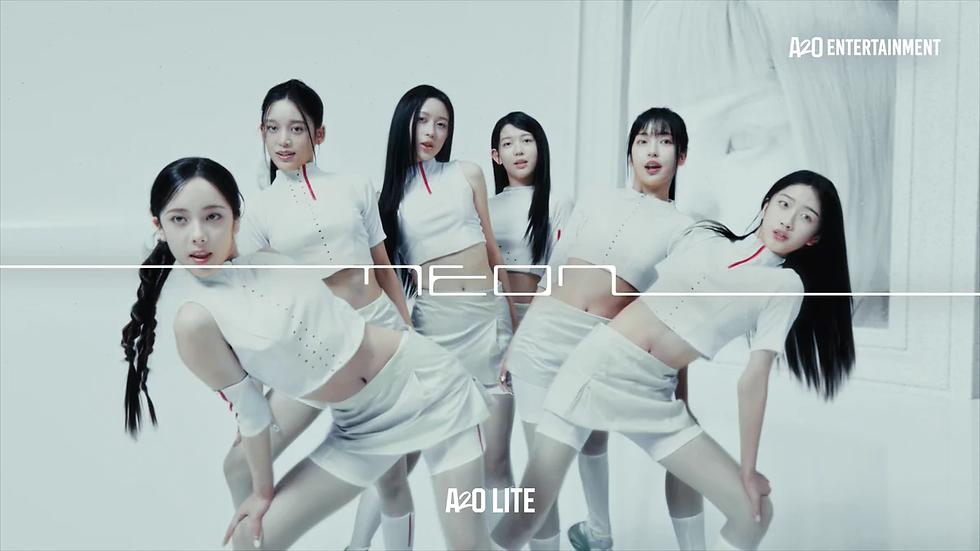
A2O LITE is giving fans another reason to look beyond the music with its latest “NEON” INFINITE music video, an experimental visual production that puts emerging 4D Gaussian Splatting (4DGS) technology in the spotlight.

Following the group's debut single “NEON” and its earlier INFINITE clips, this latest release continues A2O Entertainment's exploration of how technology can reshape the way artists and their performances are captured.
And if you've been following our coverage, you'll recognize that this isn't the first time we've explored A2O LITE's ambitious approach to music video production.
At Dojeon Media, we previously introduced readers to the group's use of 4D Gaussian Splatting, examining how this emerging technology could bring a new dimension to K-pop visuals. Now, the latest INFINITE release gives us another opportunity to explore what that vision could look like in practice.
A2O LITE's “NEON” Gets an INFINITE Makeover
A2O LITE's “NEON” has already established itself as an important introduction to the nine-member group's musical identity. But rather than simply relying on the original music video to introduce its visual concept, A2O is continuing to expand the experience through its INFINITE project.
The group has released multiple “NEON” INFINITE clips, beginning with INFINITE CLIP 1 on October 24, followed by CLIP 2 on October 28 and CLIP 3 on November 1.
The latest “NEON” INFINITE music video takes the project another step forward.
According to the official A2O WORLD release description, the video was filmed at INFINITE STUDIO and powered by 4DV.ai's 4DGS technology.
Its accompanying tagline captures the ambition behind the project:
“From a camera that captures, to a camera that creates.”
It's a simple statement, but it raises an interesting question about the future of music video production. What if the camera's creative possibilities didn't have to end when filming was finished?

What Exactly Is 4D Gaussian Splatting?
If you've heard us discuss 4D Gaussian Splatting in our earlier A2O LITE coverage, here's a quick refresher.
4D Gaussian Splatting is an emerging technology that reconstructs dynamic 3D environments over time. Instead of recording a conventional sequence of images from a fixed camera perspective, the technology uses visual information to recreate a scene viewable from different viewpoints.
In A2O's INFINITE production concept, the approach involves capturing artists and their performances through multiple cameras and reconstructing their movements within a three-dimensional space.
This creates new creative possibilities for visual storytelling, including camera perspectives and movements that aren't limited to the original filming angles.
The distinction is important.
Traditional music video production makes many of its creative decisions during filming. With 4DGS, some aspects of the visual experience can be developed and adjusted through the reconstructed scene afterward.
For K-pop, where choreography, formations, styling and camera movement are central to the viewing experience, that's an especially interesting possibility.
From A2O LITE to the Future of K-Pop Production
What makes A2O's approach worth watching is that the technology isn't being presented as an isolated experiment.
The company has positioned INFINITE STUDIO and 4DGS as part of a broader entertainment and technology vision.
Producer Lee Soo-man has discussed the idea of moving beyond a camera that simply records what it sees toward a camera that can create new visual possibilities.

The concept also connects to his earlier work with the Matrix Camera System, which was used in music video productions involving artists such as BoA, TVXQ, Girls' Generation, and SHINee.
That earlier approach used multiple still cameras to create the illusion of a moving camera around a subject. The INFINITE concept builds on a similar creative ambition, but applies it to moving images and dynamic three-dimensional reconstruction.
It's an interesting connection between an earlier era of K-pop visual experimentation and the possibilities offered by newer production technology.
For A2O LITE, “NEON” is becoming a platform through which that vision can be explored.
Could This Technology Change How We Experience K-Pop?
Here's where things get particularly exciting.
K-pop fans are accustomed to experiencing performances through music videos, dance practices, fancams, performance videos, and live concerts.
But imagine how emerging 4DGS technology could eventually expand those experiences.
Music videos with new perspectives: Production teams could potentially develop alternative camera angles and visual sequences from reconstructed performance environments.
More immersive virtual performances: Dynamic 3D environments could create new opportunities for digital concerts and virtual entertainment experiences.
New fan experiences: Future applications could allow fans to engage with performances in more spatial and visually interactive ways.
Creative freedom for artists: Directors and production teams could have additional flexibility when developing visual concepts, choreography presentations, and performance storytelling.
These are potential applications, not features that A2O LITE has confirmed are currently available to fans.
Still, the possibilities are worth discussing. As entertainment companies experiment with new production methods, the relationship between technology and artistic expression will continue to evolve.
And K-pop, with its emphasis on visual identity and performance, is an especially interesting place to watch that evolution happen.

Why A2O LITE's Experiment Deserves More Attention
There is always a temptation to focus on technology whenever a new production method enters the entertainment industry. But we shouldn't lose sight of what ultimately makes a music video successful.
The music still matters. The performers still matter. The choreography, creative direction, and emotional connection with audiences still matter.
At Dojeon Media, we think the most interesting part of A2O LITE's INFINITE project is not simply that it uses advanced technology. It's the attempt to explore how that technology can contribute to the creative experience.
The group's Zalpha Pop identity already embraces a futuristic approach to contemporary pop music. Its INFINITE project extends that identity into the production process itself.
Rather than treating technology as a separate promotional talking point, A2O is incorporating it into the way it presents its artists and their performances.
Whether this becomes a widely adopted approach across the industry remains to be seen. But experiments like this help open conversations about what the next generation of K-pop production might look like.
The Future of K-Pop May Be More Than What We See on Screen
A2O LITE's “NEON” INFINITE music video is another chapter in the group's growing visual universe, but it also highlights a bigger conversation happening across entertainment.
As 3D reconstruction, AI-assisted production and immersive technologies continue to develop, music video production could eventually move beyond the traditional boundaries of filming and editing.
A2O LITE is giving fans an early opportunity to see how some of these ideas can be explored through K-pop.
And for readers who joined us during our earlier coverage of the group's 4D Gaussian Splatting technology, this latest release is a reminder that the conversation is still developing.
We introduced the technology. Now we're watching how A2O continues to experiment with it.
One thing is certain: K-pop's next visual evolution could be about more than finding the perfect camera angle. It could be about creating entirely new ways to experience a performance.
Now we want to hear from you, DojeonFam!
Would you like to see more K-pop groups experiment with 4D Gaussian Splatting technology? Would you be interested in virtual performances that let you experience your favorite idols from different perspectives, or do you prefer the traditional music video experience?
Join the conversation and tell us what you think!
Follow Dojeon Media for more K-pop news, artist updates, and stories exploring the future of K-culture.


Comments